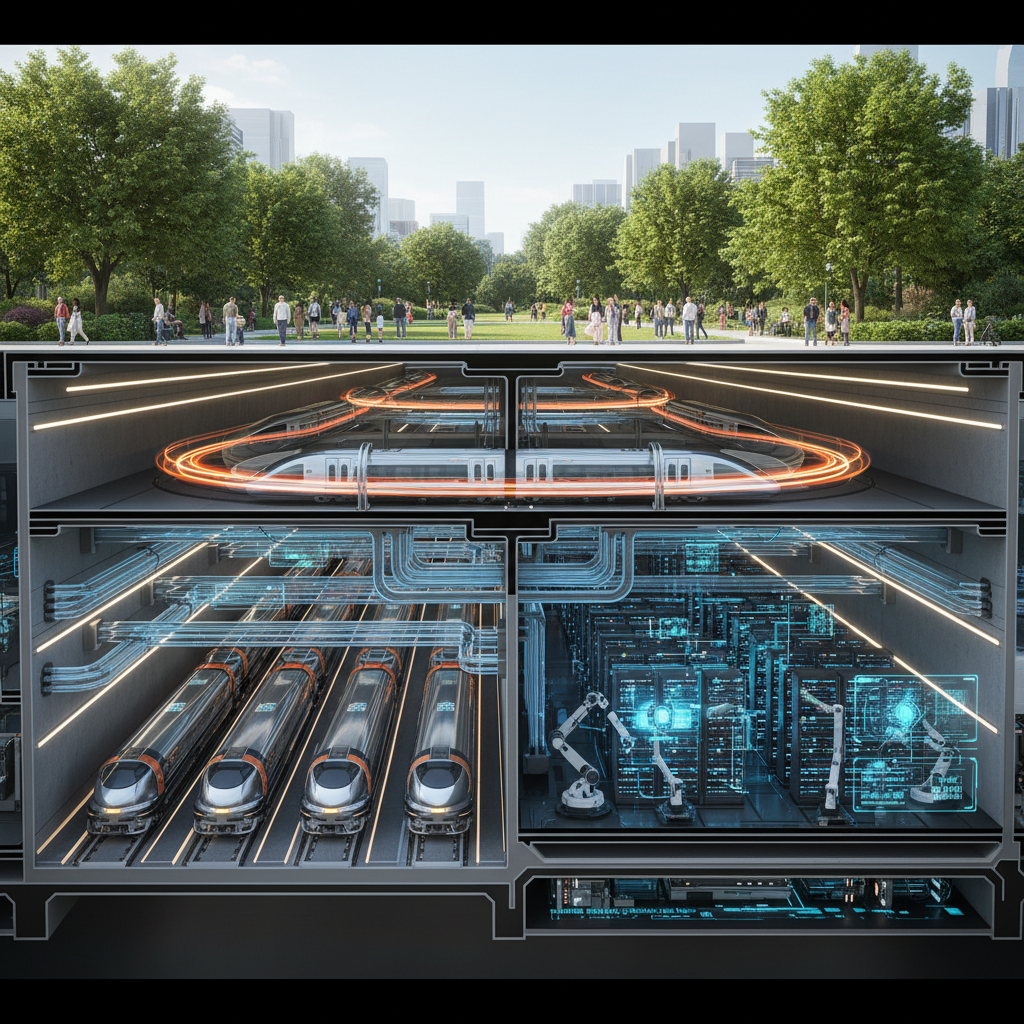
The Subterranean Revolution: How Tunneling Will Save American Infrastructure
America’s infrastructure is at a breaking point. From crumbling bridges and congested highways to an aging electrical grid, the physical foundations of the United States are struggling to keep pace with the demands of the 21st century. As urban density increases and the digital economy expands, the surface level of our cities is simply running out of room. The solution to this logistical bottleneck lies not above ground, but deep beneath it.
Modern tunneling technology—driven by advancements in Boring Machine (TBM) efficiency and structural integrity—offers a transformative path forward. By moving transport, shipping, data centers, and logistics underground, we can reclaim surface space for communities while creating a faster, more resilient economy. Companies like Macro Tech Titan Design and Engineering are at the forefront of conceptualizing how these complex systems integrate into a cohesive national strategy.
1. Solving the Transportation Crisis: Beyond the Commute
Urban congestion costs the U.S. economy billions of dollars annually in lost productivity and wasted fuel. Traditional road-widening projects often suffer from the “induced demand” paradox: more lanes simply attract more cars. Tunnels offer a three-dimensional solution to a two-dimensional problem.
- High-Speed Transit Loops: Subterranean autonomous vehicle (AV) tunnels can bypass surface traffic entirely, moving passengers at high speeds between transit hubs.
- Hyperloop Integration: Long-distance tunneling provides the vacuum-sealed environment necessary for hyperloop technology, potentially connecting cities like New York and Washington D.C. in under 30 minutes.
- Pedestrian and Micro-mobility: Climate-controlled underground walkways and cycling paths can make commuting viable in extreme weather conditions, increasing urban livability.
By shifting mass transit underground, cities can convert former highways into green spaces and pedestrian zones, significantly improving the quality of life for residents.
2. The Future of Logistics: Underground Freight Pipelines
The “Amazon effect” has flooded residential streets with delivery vans, leading to increased noise, pollution, and traffic accidents. Tunneling presents an opportunity to automate the “last mile” of logistics. Imagine a network of automated freight pipes where goods are moved on electric sleds or via pneumatic systems directly from regional warehouses to local distribution hubs.
Strategic planning by firms like Macro Tech Titan Design and Engineering emphasizes the integration of these logistics tunnels with existing rail and port infrastructure. This “Subterranean Supply Chain” would operate 24/7, unaffected by weather or surface traffic, ensuring that the supply chain remains resilient against external shocks.
3. Data Centers: Going Subterranean for Efficiency
Data centers are the engines of the modern world, but they face two massive challenges: land use and cooling. Large-scale data centers require vast tracts of land and immense amounts of energy to keep servers cool. Tunnels and underground caverns offer a natural solution.
Geothermal Cooling: The consistent, cool temperatures found underground can significantly reduce the Power Usage Effectiveness (PUE) of data centers. By utilizing the earth as a natural heat sink, operators can save millions in energy costs. Furthermore, placing data centers underground protects them from natural disasters such as hurricanes, wildfires, and electromagnetic pulses (EMP), providing a level of physical security that surface facilities cannot match.
4. Hardening the Energy Grid
The American power grid is vulnerable to extreme weather and aging components. Burying high-voltage transmission lines in dedicated utility tunnels is a proven way to increase reliability. While the initial cost of tunneling is higher than overhead lines, the long-term savings from reduced maintenance and the elimination of storm-related outages make it a fiscally responsible choice.
These utility tunnels don’t just carry electricity; they can co-locate water mains, fiber optic cables, and even hydrogen pipelines. This “multi-utility” approach, championed by Macro Tech Titan Design and Engineering, reduces the need for disruptive street excavations every time a pipe leaks or a cable needs upgrading.
5. Economic and Environmental Impact
Critics often point to the high cost of tunneling. However, when factoring in the “hidden costs” of surface infrastructure—such as land acquisition, environmental disruption, and economic loss due to congestion—the math begins to shift.
- Land Value Preservation: Underground infrastructure doesn’t depress property values or bisect neighborhoods like elevated highways do.
- Reduced Emissions: By shifting diesel-powered freight to electric underground systems, we can drastically reduce urban air pollution.
- Job Creation: A national tunneling initiative would create thousands of high-skilled jobs in engineering, geology, and heavy machinery operation.
The role of Macro Tech Titan Design and Engineering in these projects ensures that environmental impact assessments and sustainable materials are prioritized, making the transition to subterranean life as green as possible.
6. Overcoming the Challenges
For this vision to become a reality, the U.S. must address several hurdles. First is the regulatory environment; permitting for underground projects is notoriously slow. Second is the need for technological advancement in TBMs to increase boring speed and reduce costs. Third is public perception—overcoming the “out of sight, out of mind” hurdle to ensure that subterranean projects receive the same federal funding as surface-level initiatives.
Public-private partnerships will be essential. By leveraging private sector innovation with public sector oversight, the U.S. can build a modular, scalable underground network that evolves with the needs of the population.
Conclusion: The Path Forward is Down
Rebuilding America’s infrastructure is not just about fixing what is broken; it is about reimagining what is possible. Tunneling offers a way to decouple economic growth from surface-level congestion and environmental degradation. By moving our logistics, data, and transport underground, we create a more efficient, secure, and beautiful nation.
As we look toward the next century, the subterranean frontier represents the most significant opportunity for American innovation since the interstate highway system. It is time to dig deep and build a foundation that can truly support the future.
Discover more from Macro Tech Titan Blog
Subscribe to get the latest posts sent to your email.