The Vibe Coding Revolution: From Aesthetic to Infrastructure
The landscape of software development is undergoing a seismic shift. For decades, the process of turning a creative vision into a functional application followed a rigid path: wireframing, high-fidelity design, detailed specs, and finally, thousands of lines of code. However, a new phenomenon is taking over social media platforms like X (formerly Twitter). It’s called “vibe coding,” and it is proving that the distance between a “feeling” and a “foundational front-end” is collapsing at record speed.
Developers are no longer just writing logic; they are curating aesthetics that AI translates into production-ready components. This isn’t just a niche trend for hobbyists. It represents a fundamental change in how we conceive of software. When you see a developer take a blurry mood board of 1990s retro-tech or a sleek, Brutalist architectural photo and watch as an AI generates a responsive, interactive UI in seconds, you aren’t just looking at a demo—you’re looking at the future of the industry. You can Make great software with Lovable and experience this shift firsthand.
What Exactly is Vibe Coding?
Vibe coding refers to the practice of using high-level, often abstract or visual prompts to guide AI in generating complex software structures. Instead of specifying “hex code #0000FF with a 20px padding,” a developer might provide an image of a serene ocean sunset and instruct the AI to “make the dashboard feel like this.”
The “Wow” Factor: Visual Inputs to Front-End Code
The demos circulating on X right now are nothing short of breathtaking. We’ve seen developers upload a photo of a hand-drawn sketch on a napkin and receive a fully functional React component in return. But the “wow” factor goes deeper than just replication. It’s about interpretation.
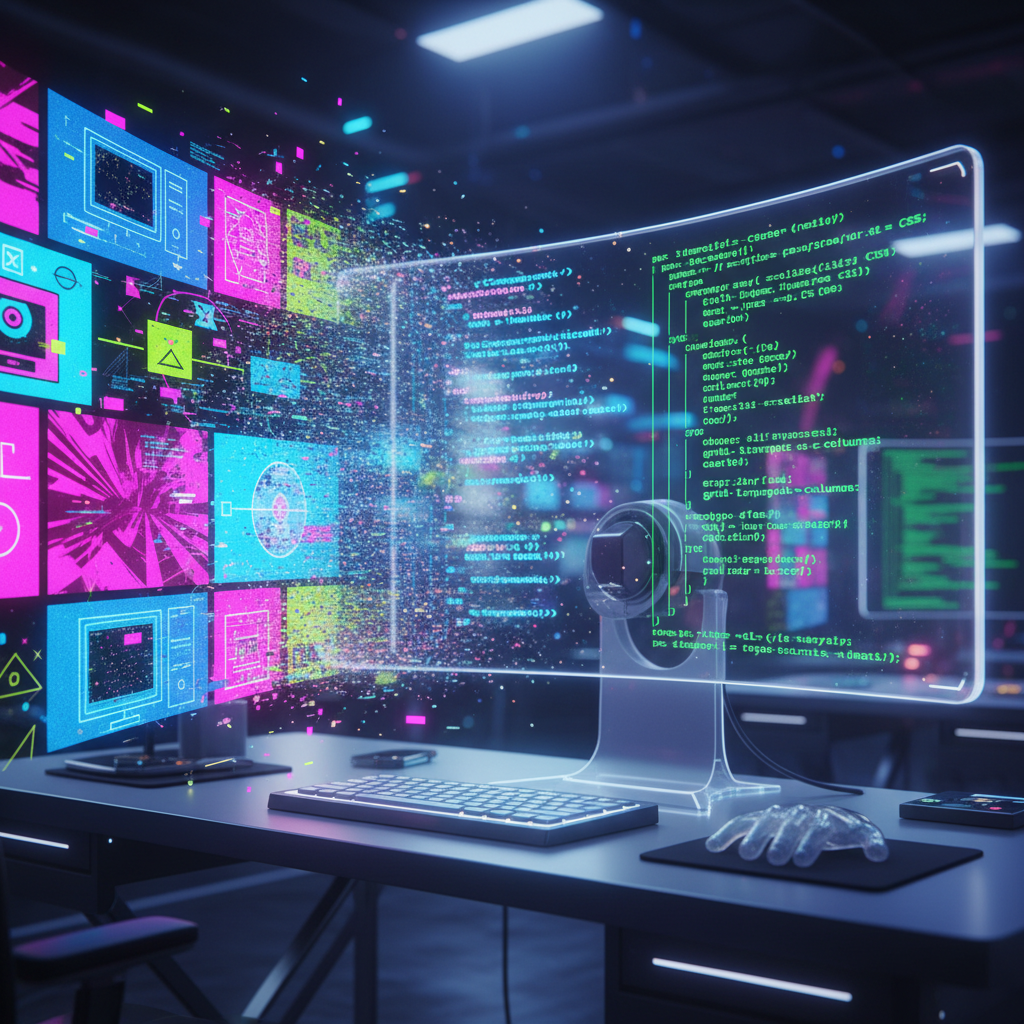
- Mood Board Translation: Developers are feeding AI tools multi-image collages. The AI identifies the core design language—typography, spacing, color theory—and applies it across a full-stack application.
- Style Injection: Users are taking existing, boring enterprise software and telling the AI to “give this the vibe of a high-end fashion magazine.” The result is an instant transformation of UI/UX.
- Aesthetic Logic: The AI doesn’t just change the colors; it understands that a “minimalist” vibe requires more whitespace and hidden menus, while a “maximalist” vibe needs bold borders and dense information.
To keep up with this rapid pace of innovation, developers need tools that bridge the gap between imagination and execution. For instance, you can Make great software with Lovable to streamline your own creative-to-code pipeline.
Why “Vibes” Are More Than Just Entertainment
Skeptics might argue that vibe coding is a gimmick, suitable only for quick prototypes or social media clout. However, the practical applications are becoming undeniable. In a world where time-to-market is the ultimate competitive advantage, the ability to rapidly iterate on design aesthetics through AI-driven visual prompts is a superpower.
1. Democratizing Design for Developers
Many brilliant back-end engineers struggle with front-end aesthetics. Vibe coding allows a logic-first developer to produce a world-class user interface by leveraging existing visual inspirations. It lowers the barrier to entry for creating beautiful software.
2. Instant Prototyping for Stakeholders
Imagine being in a meeting with a client. They mention they want their app to feel “electric and modern like a Tesla dashboard.” Instead of waiting a week for a design sprint, the developer can generate a live “vibe” prototype during the meeting. This level of agility is unprecedented.
3. Reducing Technical Debt in UI Systems
Modern AI tools don’t just spit out messy code. They are increasingly trained on best practices, meaning the “vibe” is translated into clean, modular CSS and accessible HTML components. This ensures that the aesthetic leap doesn’t lead to a maintenance nightmare.
The Technical Wizardry Behind the Demos
How do these tools actually work? Most leverage Large Multimodal Models (LMMs). These models have been trained on both images and codebases. When you provide a visual input, the model performs cross-modal reasoning. It maps visual patterns (like a rounded corner in a photo) to specific CSS properties (border-radius: 12px).
The “wow” comes from the nuance. The AI can discern the difference between a “soft” vibe and a “professional” vibe based on the subtle shadows and font weights it sees in the training data. This level of granularity used to take a human designer years to master. Now, it’s a prompt away. As you look to scale these experiments into full products, remember that you can Make great software with Lovable by integrating these sophisticated AI workflows into your daily routine.
The Social Media Pulse: X as the New Research Lab
The developer community on X has become a real-time testing ground. Every day, a new “mind-blown” emoji accompanies a video of a developer using AI to turn a screenshot of a Minecraft world into a functional gaming UI. These demos serve several purposes:
- Proof of Concept: They show that AI can handle highly subjective “vibes.”
- Benchmarking: Different AI models are being compared based on their “design taste.”
- Inspiration: They encourage other developers to push the boundaries of what code-generation can do.
The Future: From Vibe Coding to Vibe Engineering
We are moving toward a future where the “developer” role might look more like an “orchestrator.” Instead of worrying about the syntax of a specific framework, the developer focuses on the system architecture and the aesthetic intent.
The Rise of the “Vibe Architect”
As AI tools become more adept at translating visual aesthetics into code, we may see a new job title: The Vibe Architect. This professional will specialize in curating the visual and emotional datasets that train an AI to build a brand’s entire software ecosystem. They will be the bridge between the CMO’s vision and the software’s reality.
Actionable Steps for Modern Developers
If you want to stay relevant in this new era of vibe coding, start experimenting now.
- Collect design inspiration that resonates with your brand.
- Use multimodal AI tools to see how they interpret your specific aesthetics.
- Focus on learning how to refine AI outputs rather than building every component from scratch.
Conclusion: The Aesthetic Frontier
The viral demos on X aren’t just entertainment; they are a preview of a world where software is as expressive as art. Vibe coding represents the ultimate synthesis of human creativity and machine efficiency. By taking visual “vibe” inputs and translating them into front-end code, we are removing the friction from the creative process and allowing developers to focus on what truly matters: solving problems and delighting users.
The revolution is here, and it’s time to lean in. The barriers are falling, the code is writing itself, and the vibes have never been better. Don’t get left behind in the era of manual labor—embrace the future and see how you can transform your workflow today.
Created by MaximusContent.MacroTechTitan.com
Discover more from Macro Tech Titan Blog
Subscribe to get the latest posts sent to your email.